Monday, 22 February 2016

The Man Behind the Medium: Helen Duncan and Albert Stewart

Spiritualist medium Helen Duncan is most frequently remembered for being the last person convicted and imprisoned under the 1736 Witchcraft Act in 1944. Revered by some as the most talented physical medium in history and reviled by others as a monumental fraud, Helen did not work alone. Like many mediums, she believed fully in the support of spirit guides - entities from the spirit world who acted as a bridge between the living and those who had passed over.


Helen Duncan


Helen had several guides after she started to develop her gift of mediumship, but one in particular stayed with her for the majority of her career and made the biggest impact on both Helen's work and the lives of those who knew her. 

Albert Stewart made his first appearance around 1927, when the dangerously erratic Matthew Douglas was deemed no longer suitable to be Helen's spirit "control" after he threatened to kill the medium. According to accounts of the meeting, Albert introduced himself as having been born in Scotland around 1883, where he had lived before emigrating to Australia with his parents. There he became an apprentice pattern maker, but died in 1913 at the young age of 33.

Unlike the reprehensible Douglas, Albert was, by all accounts, of a much calmer nature. According to Helen's daughter Gena's recollections, the newly arrived control reassured Helen and those gathered with her, declaring that “Together we will move forward to a better understanding and better phenomena.” Indeed Albert did not fail to deliver: under his guidance Helen's career as a physical medium took off in a way that no one had expected.

Far from just guiding Helen in seances, Albert became a full member of the Duncan family. The children referred to him as “Uncle Albert” and they prayed to him along with God to protect them and keep them safe. Helen herself kept a picture of a bust of Albert in her own bedroom, and one of the family homes was named Albertine partly in his honour. 

Albert's word was law in the Duncan household, with many of his words of encouragement and guidance staying with Helen and her children alike many years after they were uttered. It was a good thing that he was listened to, as there were several occasions on which it was believed Albert saved the lives of those he watched over. At the end of his very first appearance he warned Helen and Henry that they should tell the hospital where poorly Gena was being treated that she should be moved from the doorway: it was timely advice, as the ill child was later discovered to be suffering from pneumonia. Another time Albert expressed his concern about a mutual friend, contributing to a later diagnosis of skin cancer which was then kept at bay through the guide's advice. Albert was even believed to have saved Helen herself: in the operating room where the medium was undergoing a hysterectomy, a voice was heard declaring that the surgeon had cut far enough. This was discovered to be the case, but afterwards no one present would or could admit to having uttered the words. When the voice was described to Helen's husband, Henry Duncan, the mystery was deemed to be solved - Albert, Henry declared, had spoken again. 


The Two Worlds of Helen Duncan, containing
Helen's daughter Gena's recollections of her mother
and Albert.


There were times however when Albert was not heeded so closely, leading to disaster for the medium he attempted to protect. Albert had tried to warn Helen of impending danger before an ill-fated séance in 1933, telling her to take care, (though not specifying of what.) The seance turned out to be a trap, and Helen was arrested for suspected fraud. Albert spoke out again in 1944 when Helen was running a series of seances in Portsmouth for the Master Temple Psychic Centre: he stressed that a gentleman in naval uniform should not be admitted to one seance, and again a few days later advised that a group of three men should be turned away. The cost of not heeding Albert's words were far greater this time: Helen was arrested, charged, and found guilty at The Old Bailey, sentenced to serve nine months imprisonment in Holloway Prison. 

Many people spoke of their experience of Albert over the years he worked as Helen's guide. One thing on which almost everyone commented was his voice. The aforementioned surgeon described the mystery voice he heard as an “Oxford” accent. The President of the International Spiritualist Federation described Albert's voice as “One of the most musical voices” he had ever heard. Other attempts to describe the voice they heard were “A nice masculine voice,” and “cultured Australian," and the glowing report by one witness of Albert being “the nicest spoken man I have ever met.” One of the few people to deny Albert his Oxford accent was Hannen Swaffer, the renowned drama critic who was one of Helen's staunchest supporters – his objection was that the "Oxford Accent" was a fabrication and purely a “BBC idea”. When pressed for his views on the voice of Helen's guide he eventually said he had heard it described as Cockney and also Australian, but that he himself simply thought it “natural”.

Personality-wise, Albert was a convincingly human mix of contradictions. Whilst courteously referring to Helen as “Mrs Duncan" at all times, that did not prevent him from making jokes at the medium's expense. There are several recorded instances of him joking about her substantial weight, along with complaints about her smoking habit and the resultant coughing that was one of his pet peeves. Albert was also not without a sense of humour: on one occasion he invited a Dr. Rust to examine him during a séance at the London Psychic Research Centre, quipping afterwards that the Doctor would be able to tell the others that he was indeed “all man.”

When in a genial mood, Albert gave permission for photographs to be taken by those he considered sympathetic, and was happy for spirit forms to be looked at closely, even giving permission on occasion for samples of ectoplasm – the substance that came from the medium's body and of which the spirits were formed – to be taken and studied. He also - as befitted his role of Master of Ceremonies - was given to a certain amount of showmanship. Once when asked if phenomena could occur if Helen was bound he showed that indeed it could, tying and freeing the medium in the space of seconds to an amazed audience.

Seance sitters sometimes came in for Albert's acerbic wit, but there was one person in particular who provoked his ire more than any other: Helen's husband Henry. At various time he is reported as having called Henry an ass and a fat head, and even on one occasions threatened to strangle him in utter exasperation.


A photograph of a spirit form taken with
permission by Albert.

At Helen's trial in 1944, many came forward to give testimony that they had witnessed Albert and heard his voice. They had heard him speak, and some had even touched him, one speaking of an occasion where the obliging guide had put his very real bare foot into a sitter's hand. Others told of how they had felt Helen's hand and then Albert's - one rough and small, the other smooth and long fingered. There were times when the two had actually been seen standing next to each other - Helen at 5ft 4, with Albert towering over her at just over 6 feet tall. These were rational, sensible people, respected members of their communities with respectable jobs and lives, all willing to testify that Albert Stewart was very, very real. 

Not everyone was so convinced though. There were some who declared that “Albert's” voice was nothing more than the medium's, not even that cleverly disguised. Others insisted that there was little distinction between Helen and her guide, and that the additional height was created through tricks and poor lighting. Others complained that Albert was poorly formed, and looked like cloth with barely visible features.

Despite divided opinion as to his existence, it mattered little to Helen and her family, their belief in Albert continued right until the end. In 1956 as Helen lay dying,  Albert was there with her, telling visiting friends two days before her death that “We are talking Mrs Duncan home. She has well earned her rest." The bond remained: shortly after her passing, Helen sent a message via another medium that Albert had been there to meet her on the other side.


Bronze Bust of Helen Duncan
displayed in Stirling. 


Unlike some spirit guides, There is currently no evidence of Albert having being a true historical figure before he passed into spirit, with no record of birth or death discovered so far to corroborate his story of his origins.  Does anyone have any information on the historical Albert? If so it would be great to hear from you.

And for those curious to hear the voice of Albert for themselves, a rare recording from a Helen Duncan seance can be found here: Albert is the first voice to speak. 

Link to Albert's Voice.


Thursday, 28 January 2016

#FolkloreThursday: Plans Within Plans!


There are exciting times ahead for #FolkloreThursday! The response since starting the hashtag back in the summer has been overwhelmingly positive, and more than a few people have been in contact to ask whether there are any plans to take the project further. It is with great pleasure that we can officially reveal that yes there are – in the form of a FolkloreThursday website!


There's been a lot of work going on behind the scenes, but we can now announce that the site is due to go “live” on Thursday 3rd March, 2016.


In the meantime, sign up to the #FolkloreThursday Mailing List (click the link!) to be kept up to date on website developments and future #FolkloreThursday plans! 


Monday, 25 January 2016

The Husband of Witches: The Marital Strife of Thomas Oliver

Having one wife accused of consorting with the devil was crisis enough. It is possible however that Thomas Oliver of Norwich, Norfolk, had not one but two wives who went to their deaths on accusations of witchcraft.  

Thomas Oliver's exact date of birth is unknown, but he married Mary Leman at St. Andrew's Church, Norwich on 29th January, 1626. Three children were born to the couple: Mary in 1627, (who sadly died in April 1635) John in 1635, and Thomas, whose birth year is unrecorded. 


St Andrew's Church, Norwich


Nothing else in known about the early years of their married life, but in May 1637, 

“When in the reign of Charles I an endeavour was made to suppress the Puritans, a ship called the Mary Anne was fitted out at Yarmouth, by a merchant named Payne, for the conveyance of the persecuted to New England.” [Perlustrations in Yarmouth, England, Vol III]

Thomas Oliver and his family sailed from Ipswich on the Mary Anne of Yarmouth, heading for Massachusetts Bay. Thomas' age is listed as 36, with his wife at 34. Thomas Doged, aged 30 and 12 year old Mary Sape accompanied them as servants.  

There may have been more personal and pressing reasons for Thomas Oliver's family to leave England however. Mary apparently:

“Had the faculty of speech to an unpleasant excess, and had suffered in England for neglect of some customs of trifling importance in the solemnities of the Church.”

If that was indeed the reason for their departure, the problems that beset the family did not stop with their relocation. Mary Oliver proved to be decidedly outspoken in her opinions, and she found herself in trouble on more than one occasion for declaring in favour of Roger Williams, the Puritan theologian too extreme for the Puritans. His separatist ideas were not welcomed in Salem and he had withdrawn from there under threat of arrest, but that did not stop Mary Oliver from speaking up for him and in 1638 she was punished for taking his side. The state of affairs did not improve, and it was said that she continued to be at loggerheads with the elders of the Salem community in which they lived as late as 1646.  


Statue of Roger Williams


A couple of years later however saw the couple returning to England, the implication being that they had to flee yet again due to Mary's refusal to curb her tongue and Thomas' refusal or inability to control his wife.

It is there that details grow unclear. All sources agree that Mary Oliver died within a few years of their return to England. What makes matters interesting however is the mention of a record from Norwich in 1659 of:

“Mary Oliver burnt for witchcraft and her goods confiscated for the use of the city.”

The date coincides with Thomas and Mary's return to England, and it was from Norwich that they set out those years before. I'm still digging, but there currently doesn't seem to be another potential candidate for Mary's identity (although that doesn't mean necessarily that it is the same woman – watch this space!) and until more evidence comes to light it appears slightly more than possible that this was the woman Thomas Oliver married and quarrelled with so frequently.

Map of Salem, Massachusetts 

Whatever the fate of Thomas' first wife, she was dead by 1666, and the widower was back in Salem and married to Bridget Wasselbe, nee Playfer/Playford on 26th July of that year. It was soon apparent that this marriage would be no calmer than his first. Bridget was known locally as argumentative, and she was taken to court for calling her husband bad names on the Sabbath. At one time their arguing grew so bad that the pair were ordered to stand back to back and gagged in the market place for about an hour to repent of their crime. Later on it is also said that they were sentenced to be whipped if they did not stop arguing with each other. Thomas Oliver was not, it seemed, slow to be harsh with his wife, and it was often reported that her face was bruised and battered by him.

Thomas also made his views known. Bridget was, he declared, “a bad wife”, and known to be in league with the Devil who had come to her at night and sat up with her until dawn.

In 1679, Thomas Oliver died. Although she was made administrator of his will, and the house and land were left to her, Bridget, in reality, had very little, as any money was taken by creditors. To make matters worse, Bridget's step children accused her of having bewitched their father to death, amidst other accusations that Bridget was a witch. She was tried before the Court of Assistants, by the Reverend John Hale during which:

“A woman in the neighbourhood, subject to fits of insanity, had, while passing into one of them, brought the accusation against her; but, on the return of her reason, solemnly recanted, and deeply lamented the aspersion. In a violent recurrence of her malady, this woman committed suicide. Mr. Hale had examined the case at the time, and exonerated Bridget Bishop, who was a communicant in his church, from the charge made against her by the unhappy lunatic. He was satisfied, as he states, that "Sister Bishop" was innocent, and in no way deserved to be ill thought of. He hoped "better of said Goody Bishop at that time." [Charles Upham, Salem Witchcraft, 1867]

The case was accordingly thrown out, Bridget no doubt hoping that would be the end of the matter. Bridget went on to marry Edward Bishop and although their marriage was claimed to be as volatile as the one she had known with Oliver, she escaped the courts until 1692 when she was accused of bewitching several young girls in Salem. Evidence given against her then was dragged up from the preceding decade, including her previous trial, and although she pleaded her innocence, Bridget was found guilty and condemned to death, becoming the first victim of the Salem Witch Trials.


“On June 10, 1692, High Sheriff George Corwin took Bridget to the top of Gallows Hill and hanged her alone from the branches of a great oak tree. Now the honest men of Salem could sleep in peace, sure that the shape of Bridget would trouble them no more.” [Charles Upham, Salem Witchcraft.]

Was Thomas Oliver married to two women who met their fate as accused witches? If so, were there others who also found themselves in the same unenviable position throughout the witch trial period? As I said before, it is food for thought - watch this space. 


[It is also interesting to note that Mary Oliver is mentioned in later sources as having been executed for killing her husband by witchcraft. It will be remembered that this was a claim also made against Bridget Bishop – it is possible that the two wives were confused in later decades, with Bridget's accusation being attributed to Mary.]

Monday, 18 January 2016

The Women of Walkern: Which Could be a Witch?


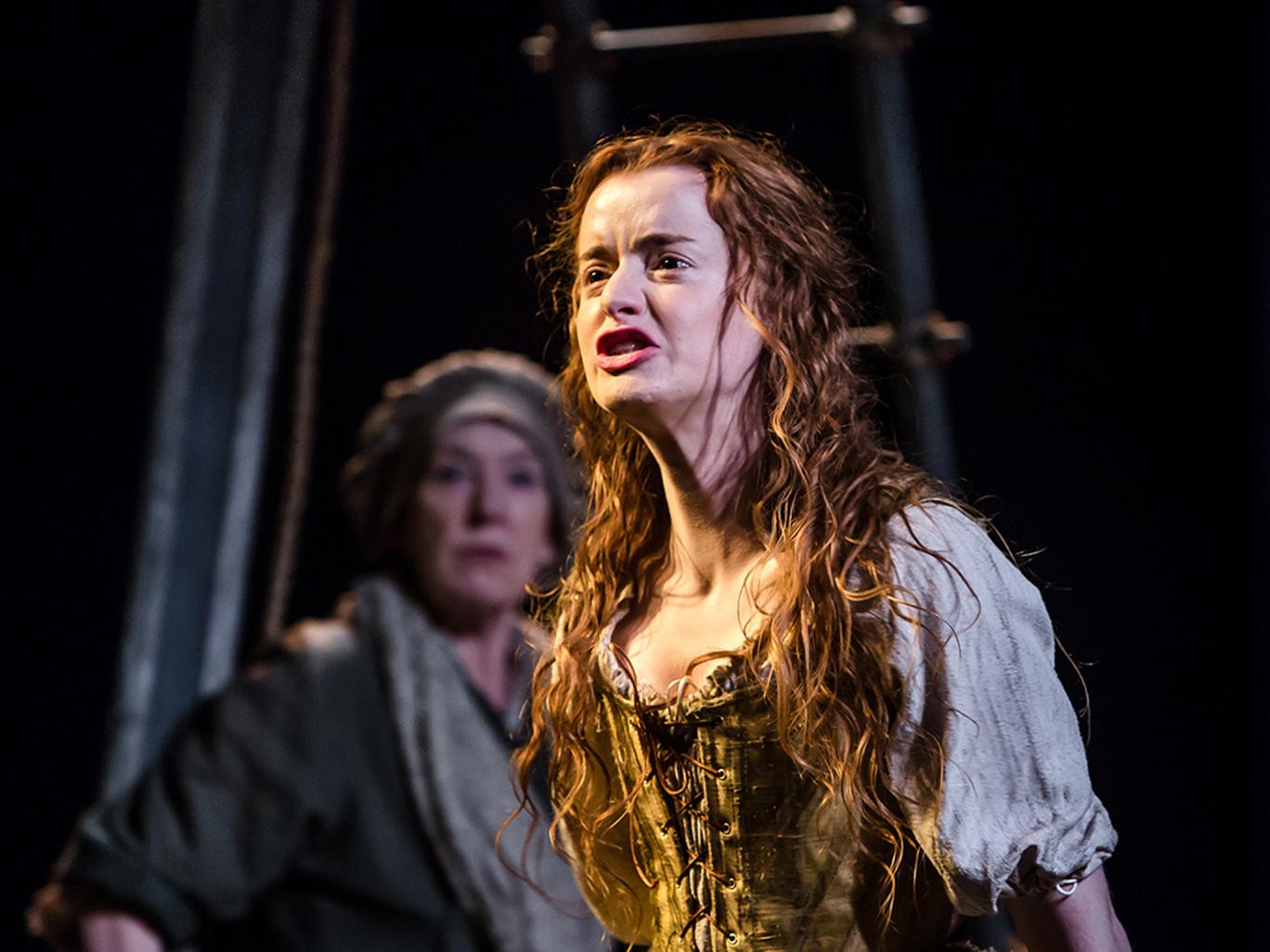
The trial of Jane Wenham for witchcraft in 1712 was one of the last in England before the passing of the 1736 Witchcraft Act meant witchcraft was no longer a crime punishable by law. As anyone following here at The Witch, The Weird, and The Wonderful will know by now, Jane and her story have fascinated me since I started writing about the goings on in Walkern for Accused. It was hardly surprising that I got incredibly excited to learn of the play Jane Wenham: The Witch of Walkern. Written by Rebecca Lenkiewicz, produced by Out of Joint and directed by Ria Parry, this superb piece of theatre not only gives the essential elements of Jane's case an accessible and thought-provoking spin, but acts as a mirror to the culture and community of the times of the witch trials in general.


The play stands out immediately for having a predominately female cast, a rare enough thing even in this day and age. This isn't just done for effect: each character is fully-drawn in awe-inspiring detail, and the play without question passes the bechdel test. There is more than that however – it isn't by accident that those five characters represent five separate sub-categories of women – those most likely to be particularly vulnerable during the time of the witch trials and beyond, those most likely to be both accusers and accused. For when tragedy strikes the already unstable community of Walkern, the hunt is on to find someone to blame - someone guilty of both murder and witchcraft. 


Jane Wenham and Ann Thorn

The Cunning Woman:
Common in local communities even into the 20th century, the cunning woman performed several roles: performing love magic, locating lost property, providing charms to protect people and animals, and aiding with any number of ailments. They also dealt in counter magic, offering cures for those who thought themselves bewitched. 

In the play, Jane Wenham is portrayed as Walkern's cunning woman: collecting herbs to make her salves and possets, snuggling with her chicken James for warmth at night, Jane is seen as “odd” by her neighbours, but generally tolerated. In the heightened atmosphere of tension after Elinor Thorn's hanging for witchcraft however tongues start to wag, and Jane's eccentric behaviour is seen as something more sinister by the newly arrived Reverend Crane, who sets out to discover her "guilt".

The cunning woman had a somewhat ambiguous role in the community she served. For while she was often seen as a protective and curative force, in times of strain or unrest, or if she failed to help someone who came to her, she could just as quickly come under suspicion herself. It was therefore not unusual for the cunning woman to become a target for accusations, the line between black magic and the protective magic she dealt in becoming increasingly blurred. William Perkins condemned all "magic" equally, stating that "by Witches we understand not those only which kill and torment: but all Diviners, Charmers, Juglers, all Wizards, commonly called wisemen and wisewomen." 

 The historical Wenham may or may not have fulfilled the role of cunning woman role in the Walkern community, but it is possible that she tried to help Ann Thorn in some capacity, as the young woman is recorded as having lamented that Jane had "ruined" her. 

Historical cunning women accused of witchcraft include potentially Jane Wenham herself and Joan Peterson, the infamous Witch of Wapping. 


Hannah Hutch as the troubled Ann Thorne

The Young Girl: 
Girls in their teens play a prominent role in many a witch trial tale, their emotional and biological volatility leaving them, it has been suggested, particularly open to being exploited and to believing their own flights of fancy. 

The play opens on Ann Thorn reeling with shock after her mother is hanged for witchcraft: young, friendless, not knowing which way to turn, Ann is torn between the seeming support of two local women and her friend Jane Wenham.

Both the stage and historical Ann were instrumental in the accusations against Wenham. Feeling betrayed by her friend after discovering Jane has lied to her regarding her past, Ann turns on the older woman, denouncing her at the urging of the rest of the village and abandoning her to her fate. In the historical story of Jane Wenham, it is Ann Thorn who is one of the earlier to make accusations against Jane Wenham, declaring that the old woman had made her run to collect sticks and sent her into fits.

In addition, Ann of the play has the added taint of being the daughter of a witch: it was believed that witchcraft passed through families, as witnessed in the Pendle and Warboys cases among others. Her mother was also known for her immoral behaviour throughout Walkern, and her own confused behaviour more than hints at the belief in “like mother, like daughter.” 


Reverend Crane and The Widow

The Widow:
Widows were two-a-penny in 17th century England, with women tending to outlive their husbands rather than vice versa throughout the period of the witch trials. 

Although many widows found themselves destitute and beholden to the parish, Walkern's widow is the landlady of the local alehouse and financially independent. Anything of importance is discussed within her walls, and there is little that goes on that she does not know about. Her unmarried state however leaves her unexpectedly vulnerable; not only to accusations of immorality due to her affair with a married man, but also to being a temptation to men such as the virginal Reverend Crane. A woman with property and not visibly controlled or protected by a man was ultimately dangerous, leaving her open to attack. 

Widows who were accused of witchcraft include Mother Sutton of Milton Ernest and Mary Lakeland, one of England's few witches to be burned at the stake for the crime of murdering her husband through witchcraft.


Judith Coke as Priddy Goodstern

The Old Woman:
“Old” did not necessarily mean the same in Jane Wenham's time as it does to us today: then, being over fifty could mean being labelled or ancient. As with widows, there were many more "ancient" women than there were men and it was a vulnerable position to have indeed: the elderly were more likely to be in need and to ask for charity from their neighbours, leading to recriminations and guilt on both sides if requests were refused. Age and infirmity could also increase irritability and an unpleasant nature, leading to conflict with one's neighbours. 

Walkern's Priddy Goodstern is not only old but blind, and it is likely that she has often found herself in need of assistance from the community. A large proportion of women accused of witchcraft were referred to as “old”, and Priddy is indeed seen meeting with local woman Bridget Hurst and Ann Thorn and discussing when “the black man” or the Devil has visited her both as a child and in later life. 

Priddy's blindness brings to mind that of Old Demdike, one of the notorious "Pendle" witches. 


Kemi Martha and Ann Thorn

The Servant:
A run-down of the women of Walkern would not be complete without mention of the servant, a class known historically for gossiping and being too quick to believe tales of witchcraft and superstition. 

A former slave from Virginia, Kemi Martha now works as housekeeper to the Bishop. She is free to come and go as she pleases and is paid a wage, but her position only offers her a certain degree of protection: like other servants at the time, ultimately she is at the mercy of her employer's good will, a fact particularly starkly represented in Kemi's relationship with the Bishop. Already the target of gossip due to her skin colour and intimacy with her employer, as tensions begin to rise in the village Kemi finds herself under yet closer scrutiny, relating how, upon rolling a bucket down the hill, Bridget Hurst and Priddy Goodstern whispered about her. 

The character of Kemi is particularly reminiscent of Tituba, the "Indian" slave who was accused at the start of the Salem witch trials, twenty years before the events in Walkern. The bucket incident also harks of true events, as the accusation that she had made a bucket run to her down a hill was used against young Mary Spencer in 1634.


Jane Wenham: The Witch of Walkern is showing at the Arcola Theatre, London, until 30th January.  

My review of the play can be found here. 

* All production images copyright Out of Joint/Richard Davenport


Wednesday, 6 January 2016

Wednesday Weirdness: The Mysterious Teleportation of Jacob Mutton (Bodmin, Cornwall 1687)

After a lovely and much-needed rest, The Witch, The Weird and the Wonderful returns with the first Wednesday Weirdness post of 2016! It is a pleasure to welcome Brian Langston, with a tale of a mysterious teleportation that leaves more questions than answers...

*********


On a dusty shelf in a quiet corner of Oxford’s Bodleian Library lies a long-forgotten single sheet pamphlet telling the incredible tale of how a young man in North Cornwall during the late 17th century was mysteriously teleported 30 miles from his home by an unknown force.


Reading it though a 21st century lens, the story sounds remarkably like an early account of alien abduction although of course such phenomena had not then been identified and the language simply did not exist to describe the experience he underwent.

The reader is left yearning for more information about this astonishing event or the opportunity to question the victim for greater detail, but we are left with a short factual account of a very extraordinary event which took place in a lonely spot near Bodmin Moor over 300 years ago, about which we must draw our own conclusions.

Jacob Mutton was a young servant employed by William Hicks, the Rector of Cardinham in Cornwall. He was held in high regard as an honest and hard working young man. On Sunday 8th May 1687 at around 8pm Jacob retired upstairs to bed in the Rectory at a place on Bodmin Moor called Park. Already in bed was another young lad with whom he shared the room. As Jacob began to undress he heard a strange noise which he described as a ‘hollow voice’ saying “So Hoe, So Hoe, So Hoe”. Listening intently he realised the voice was coming from the adjacent room. He went into the room next door to investigate the strange sounds. He again heard the same voice coming from the direction of the window and so walked across the room and looked outside but could see nothing. The last thing he remembers is holding onto a metal bar in front of the window and then... he disappears! 


Early the next morning a cross bar is found on the ground 17 feet below the window but there is no sign of Jacob. Simultaneously Jacob is found lying unconscious in a narrow country lane by a group of travellers on their way to a country market. As he regains consciousness, they find him mystified and confused and in completely unfamiliar surroundings. He is still clutching the iron bar as he staggers to his feet and asks where on earth he is. Jacob is in utter disbelief when the travellers tell him is 4 miles outside Stratton near the Cornish town of Bude. This was 30 miles from his home as the crow flies, and a place Jacob had never been in his life.

They take the dazed and bewildered Jacob into their care and he goes with them to Stratton Fair where after regaining his composure, they set him on the road to Camelford about 20 miles from where he was found. After spending Monday night in Camelford, he continued to walk back towards home arriving back at the Rectory in Cardinham on Tuesday morning.


Jacob was unharmed but his demeanour had changed. From a brisk and cheerful young fellow, he was subdued and melancholic. Although he had only a vague recollection of his disappearance. He told them that ‘a tall man’ had taken him over ‘hedges and brakes, without weariness or hurt’ he could not remember who held the iron bar or how it came to be in his hand or what became of his strange companion.

There the story ends..... The brevity of the account is both fascinating and frustrating and leaves so many unanswered questions.


  •  Who was Jacob Mutton and what became of him?
  • Is it relevant that the incident took place on the mysterious Bodmin Moor- a place closely associated with strange happenings which have spawned legends across the centuries?
  • Who was the mysterious stranger who took Jacob?
  • Does his account suggest they were flying over ‘hedges and breaks’?
  • Where exactly was the scene of the disappearance?
  • What was his room-mate doing at the time and what did he witness?
  • Does the Rectory still exist or if not where was it?
  • What was the significance of Jacob’s deposition site - why was he left there?
  • Was his melancholy a permanent condition after his experience or a temporary effect of shock?
  • Did the experience change him in any other ways?

This extraordinary account has only recently been unearthed after being lost for centuries and surely warrants further local enquiry to discover the truth about the mysterious teleportation of Jacob Mutton.


Brian Langston is the former Assistant Chief Constable for Thames Valley Police. He now lives in the South of France and writes on a variety of topics including true crime, mysteries and the paranormal.
He can be contacted on ghostsofwindsor@gmail.com


Monday, 4 January 2016

The Bookshelf Survery

Getting back into the swing of things after Christmas seemed the perfect time for a bit of fun. Book-related fun is all the better, so a big thank you to the lovely Dee Dee Chainey for tagging me in the Bookshelf Survey. (Though let's face it, we hardly need an excuse to talk about books!) 


Find a book on your shelves for each of your initials.

(I have a confession to make on this one. My first response was “Oh dear, I'm not sure I'll have any that start with W....” Then I looked. Yeah. I read and write mostly about witches. Enough said....!)

It was very hard to pick two, but I finally decided on:


Witchcraft, Magic and Culture, 1736-1951 by Owen Davies.
This fantastic book was actually one of the first I read on witchcraft history. Covering a period often neglected in witchcraft studies it looks at beliefs and practices relating to witchcraft across all sections of society in the decades after the passing of the 1736 witchcraft act. I love Owen Davies' style and anything by him promises to be a good read, but this is my favourite and sparked my own interest in 19th century witchcraft cases.


Witches and Wicked Bodies by Deanna Petherbridge. 
This was the exhibition guide to the Witches and Wicked Bodies exhibition at the British Museum last year. The guide "provides an innovative, rich survey of images of European witchcraft covering from the sixteenth century to the present day. It focuses on the representation of female witches and the enduring stereotypes they embody, ranging from hideous old crones to beautiful young seductresses." It's still available to buy on Amazon and would highly recommend it especially if you didn't get to see the exhibition in person.

Count your age along your bookshelf. What book did you land on?


 Folklore Myths and Legends of Great Britain by Reader's Digest.
It seems I had a deprived childhood without knowing it, as everyone else I know seems to have had this book in their lives a long time before I even knew it existed. My fellow #FolkloreThursday hosts soon rectified the situation however, and now I can read about everything from giants to haunted stately homes to mermaids and everything else in between to my heart's content. It truly is a most fabulous book and there was only a limited print run, so snap up a copy (or snag your dad's!) before they all go. My only trouble now is that my 7 year old wants to have mine on permanent loan!

Find a book that takes place in your city or state.


Derbyshire Ghost Stories by Jill Armitage. 
A lovely little book filled with local ghostly tales, this book is great for flicking through for inspiration or if you just fancy dipping in for a story or two. There's the added bonus that there aren't a lot of historical sources mentioned, which gives plenty of scope for going off and getting happily lost in research. 

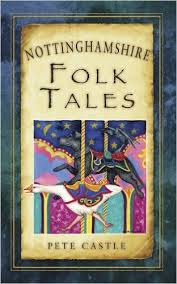
And because we're so close to the boundary of Nottinghamshire, Nottinghamshire Folktales by Pete Castle also needs a mention, not least because of the gorgeous artwork by Karen Soutar on the cover. 


Find a book cover in your favourite colour. 


 I don't seem to have any purple covered books! So instead I will cheat and share my favourite book cover of all time – that of Lloyd Shepherd's Savage Magic. I fell in love with the cover the first time I saw it, and the book itself more than lives up to it. If you like well-told historical fiction with a hefty dose of madness, magic and maleficium this is definitely worth a read!

Which book do you have the fondest memories of?


Little Women by Louisa May Alcott. 
I've lost count of how many times I've read this one, and it's certainly not one I've left behind with childhood. I regularly re-read the whole series that charts the story of the March family, but the first one is always going to be my favourite. I'm not ashamed to add that it makes me cry!


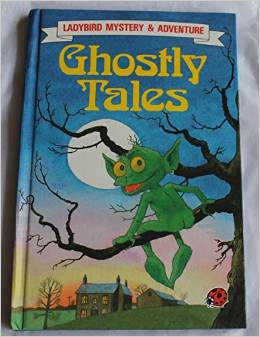
Ghostly Tales by Ladybird.
This also has to be mentioned here because it is the book that has scared me the most ever. I begged my mum to buy it for me from Woolworths when I was about seven and freaked myself out good and proper by reading it over and over. (Didn't help that we lived in the house below at the time - perfect spooky setting!) Does anyone else remember the book? I have my old copy here but can't bring myself to open it again....!


Which book did you have the most difficulty reading?


The Lord of the Rings by J R R Tolkien. 
I've started it four times now and haven't managed to get further than about 300 pages in. Think I've been beaten by this one!

Do you have a special place at home for reading?
I do a lot of reading in the bath! I think that's partly because it's one of the few times during the day when I can justify it (or at least when it isn't work related.) I also read a lot at my desk when I'm doing research etc. 

Can you read while listening to music/ watching TV?
Nope! I find it really hard to focus on reading if there is any background noise, which can sometimes be rather a challenge!

What do you use for bookmarks?
Had to laugh at Dee's answer to this, as I am also guilty of using random bits of tissue that happen to be at hand! I also use bits of paper and sometimes, rarely, actual proper bookmarks.

Are your book spines creased or unbroken?
Crease and proud of it!

What is the last book you bought?


The Faerie Thorn by Jane Talbot.
I've not read it yet as it was a Christmas present but very much looking forward to this one! 


Hope everyone had a wonderful Christmas - Wishing you all a Happy New Year, and there'll be more from The Witch, The Weird, and The Wonderful soon!