Monday, 7 February 2022

A Belated Annoucement

The Witch, The Weird and The Wonderful has moved!

This blog will no longer be updated; instead, you can find new content plus all of the existing posts over at willow.winsham.com

Looking forward to seeing you there.

Tuesday, 30 June 2020

Baptised by the Devil: The Confessions of Isobel Gowdie

Isobel Gowdie, perhaps the most famous of accused Scottish witches, came to the attention of the authorites in 1662. It is uncertain just what led to her arrest, although it seems there were rumblings in the area of Auldearn, Nairnshire, for a while beforehand. What is known is that Isobel made a series of spectacular and detailed confessions, the fullest known set of confessions known to exist for the period. 

On 13 April, Isobel, before the ministers of Auldearn and Nairn, and a panel of twelve others, confessed that 15 years ago she had met with the Devil in the Auldearn Church, where she renounced her baptism and, with one hand on her head and the other on her foot, offered the Devil everything that lay in between. She was baptised after the Devil scratched her, using the blood to perform the parody of the traditional ceremony. Her new name, according to Isobel, was Janet. This was far from the only time she saw her diabolical master: on their next meeting, they had known each other carnally. 

Over the next six weeks, Isobel confessed further. She and the group of thirteen witches she worked with had done much to bring terror to those who displeased them. Ruining crops and stealing milk from their neighbours cows were high on their list of activities, with one particular incident involving spreading a mixture made from nail clippings from the exhumed corpse of a dead infant, kale and grains on a man's muckheap - the intention being that his corn and lambs would be taken and come to the coven instead. They were able to stop a cow from producing milk by passing a plaited rope between the animal's legs: it would give no milk until the rope was cut. 

Isobel and her fellow witches had also made attempts on the lives of the children of the local Laird, and also on the life of the Laird of Park himself. A figure was made from clay, resembling one of the Laird's sons; it was laid before the fire, with the intention of causing the child greater and greater suffering each time it was roasted. 

Flight was another power Isobel posessed. With elf arrowheads obtained from the fairies, the witches lay in wait to shoot their enemies; Isobel confessed that she was responsible for at least four deaths in this fashion. 

Peter Nicolai Arbo: The Wild Hunt of Odin, via wikimedia commons

Like many witches, Isobel revealed that they were able to change their form with the following words:

I shall go into a hare, with sorrow and such great care; and I shall go in the Devil's name, ay while I come home again.

To change back into human form, they recited:

Hare, hare, God send thee care. I am in a hare's likeness now, but I shall be in a woman's likeness even now.

Finally, Isobel confessed that she had paid a visit to the Downie Hills, home to the fairies, where she had the honour of meeting the King and Queen themselves. Unlike many who visited fairies however, despite eating a great deal of meat while there, she left without difficulty after being entertained most generously by her fairy hosts. 

Although Isobel is generally believed to have been executed after a trial for witchcraft, there is no actual record of Isobel's fate or the trial that is assumed to have taken place. Her confessions have often been said to have been the product of an unstable mind, but more nuanced modern interpretations suggest that, on the contrary, Isobel acted within the narrative and cultural framework in which she lived. 


Monday, 29 June 2020

Greasing the Fat Sow and other Dorsetshire Sayings

Taking a little dip today into the "Proverbs and Proverbial Sayings" section of Dorsetshire Folklore by John Symonds Udal. Here are a few of the best:


A peck of worry won't pay a pound of debt.
The age old advice that worrying gets you nowhere. True, but hard to live by! 


Better be at the end of a feast than at the beginning of a fray.
Be happy with a little of something good, rather than risking everything by doing something dangerous or unsavoury. 


If you must grow cucumbers boil them and throw them on the dunghill.
Cucumbers were, it seems, considered generally useless; I won't be following this one, we are a cucumber-loving household here!


Don't be between two parishes at meal times.
This would mean you didn't get to eat. Definitely one to avoid! 


They like all the water to run in their own ditch. 
A warning against selfish people. 


"Every one to his liking," as the old woman said when she kissed her cow.
A Dorset-version of "there's no accounting for taste"!


As much need as a toad has of a side-pocket.
In other words, something thst is utterly unecessary.


As busy as a cat in a tripe shop.
Said of someone who is very busy, but without any noticable result. 

Greasing the fat sow.
Giving gifts and money to the already rich. 

What are your favourite local sayings? Let me know in the comments, or on Twitter 

Wednesday, 18 March 2020

Bizarre Beliefs: Animated Horse Hairs

In a week where the phrase "you couldn't make it up" has been uttered more often than we could have ever imagined, it seems a fitting time to write up my recent reading on the improbable topic of "animated horse hairs." 

Yes, you read that right: there once existed a belief that horsehairs were capable of coming to life and moving of their own volition. When the horse drank from a body of water, hair would fall from its mane or tail, and, after entering the water, would, by some undiscovered force, become animated. 

I admit I assumed this was a randomly regional belief until a bit of further research revealed that the belief in animated horsehairs was another  one of those bizarre ideas that was actually widespread across the British Isles and some areas of the United States. 

It seems that the belief dates back quite some way: Shakespeare references the idea in Anthony and Cleopatra. Agrippa's Three Books of Occult Philosophy published in 1651 states that when a horsehair is placed in water, it becomes a "pernicious worm." Giambattista della Porta's Natural Magick published a few years later recounted that not only had he had first hand experience of this transformation, but friends of his had likewise witnessed hair gaining life. 

It was also one that was slow to die out. The belief was present in 18th century Derbyshire, as Edwin Trueman mentions it is in his History of IlkestonAccording to Coleridge in the 18th century, boys in Cumberland and Westmoreland would also often experiment with this belief. They would place a horsehair in water, and, when it was removed some time later, they observed that it would twirl around their finger, compressing it. 

According to Notes on the Folklore of the Northern Counties of England and the Borders, by William Henderson, a horsehair that was kept in water would eventually turn into an eel. 

The Frank C. Brown Collection of North Carolina Folklore Volume VII: Popular Beliefs and Superstitions from North Carolina, published in 1913, records several variations. People believed that if you hang up a horsehair, when it rains it will turn into a snake. If a horsehair is put into water, after a period of time it will likewise turn into a snake. If stagnant water was used, after nine days the hair would turn into a black snake. A hair would also turn into a snake if put under running water and then held down with a stone. Putting a hair into a bottle of water and then burying it for six months would also have the same effect. 

This belief was associated with "vulgar" and "superstitious" people. Dobson's Encyclopedia of 1798 states that "Animated Horsehair" was:

"A term used to express a sort of long and slender waterworm, of a blackish colour, and so much resembling a horse hair, that it is generally by the vulgar supposed to be the hair fallen from a horse's mane into the water as he drinks, and there animated by some strange power." 

The belief was prevalent and long-standing enough even in the 17th century that Martin Lister, in his Philosophical Transactions, felt the need to soundly debunk the theory. The animated hairs were, in fact, a type of long, thin water worm, that eventually transformed into a form of beetle. Despite this fact, the idea that horse hairs could come to life clearly proved more interesting than the truth, and the belief continued for a good long time to come. 


Tuesday, 10 March 2020

The Floating Loaf: Discovering the Drowned

While flicking through my old favourite local history tome, The History of Ilkeston by Edwin Trueman, I came across yet another fascinating snippet that had me intrigued enough to go looking for more. 

"A body was drowned in the canal near Ilkeston, the means taken to discover it was as follows: a loaf of bread, scooped out and filled with quicksilver, was put into the water and allowed to float down with the current. When it came to the place where the body was, it was expected to stop."

The source quoted was The Legendary Lore of the Holy Wells of England, by Robert Charles Hope, published in 1893. A quick examination of this text however provided no further information on the case, and so I went further afield. I didn't find out anything more about the Ilkeston case (though watch this space!) but I did discover several interesting things about the practice.

It turns out the floating loaf, or St. Nicholas as it was sometimes called, was actually a common belief and practice in England in the 18th and 19th centuries, and potentially before. One of the earliest written references to this method of discovering a drowned corpse comes in The Gentleman's Magazine of April 1767. It involved the tragic occasion of a one year old child who had fallen into the river Kennet in Newbury, Berkshire. A two-penny loaf was split apart and some quicksilver - otherwise known as mercury - was placed inside. According to the report, when the loaf was sent into the water at the location where the child had fallen in, it made its way down the river when, suddenly, it turned and crossed the river before sinking. The location it sank in proved to reveal the body of the poor child.

Image from wikimedia commons, user Rainer Zenz


Proceedings of the Dorset Natural History and Antiquarian Field Club, under the heading Dorsetshire Birth, Death and Marriage Customs, refers to the pratice as a "charm or expedient", that was used in the area during the same century:

"To find the dead body of a person who has been drowned and which has not been recovered from the water the following "charm" or expedient is sometimes adopted. A loaf of bread is procured and a small piece is cut out of the side, forming a cavity, into which a little quicksilver is poured. The piece is then replaced and secured firmly in its original position. The loaf thus prepared is thrown into the river at the spot where the person has fallen in and is expected to float down the stream until it comes to the place where the body has lodged, when it will begin to eddy round and round, thus indicating the sought for spot."

Notes and Queries likewise mentions several cases across the 19th century, one from the Rev. C. H. Mayo of Long Burton. in 1872, A boy had fallen in the stream at Sherborne and drowned - this time however, the method of locating the body was not successful. 

Notes on the folk-lore of the Northern Counties of England and the borders, mentions several cases in Durham. The author had personal experience when he was a boy of people trying to locate corpses in the River Wear in Durham. Friends of Christopher Lumley had tried to find his body with a floating loaf near Lanchester, Durham, and again in 1860 this method was used when a child fell into the Wear on 21st October of that year. The loaf was not successful however, though thankfully the child's body was later discovered. 

Another intriguing method of locating a drowned body mentioned in this text was as follows:

"If a gun be fired over a dead body lying at the bittom of the sea or river, the concussion will break the gall bladder and cause the body to float."

An eye witness to this had informed the author that it had taken place twice that he had seen, but there had been no success. 

American Notes and Queries, July 1890, mentions that in "the last century" in England quicksilver in bread was used to locate a drowned body, and cites a case "vouched by credible witnesses" that the body of a boy had been successfully found in the Thames at Eton. The same source also states that in Ireland a wisp of straw attached to a strip of parchment was used to achieve the same aim, the parchment inscribed with cabalistic symbols. 

In the October 1898 volume of The Scottish Antiquary, it mentions how the practice was still in use in some areas of England, with the added details that the loaf used should be stale and that, when in the location of the body, it would stop and then spin round in place. 

There are references to the practice too in literature, the most well-known being Mark Twain's Adventures of Huckleberry Finn, where it is used in Missouri, USA. 

Locating a drowned corpse in such a fasion was therefore clearly popular in both belief and practice in England, America and Ireand throughout the 18th and 19th centuries. It seems that success was varied, but belief continued regardless to the end of the 19th century and perhaps beyond.

Have you come across a case of this being carried out, or a variation on the belief that a loaf of bread filled with quicksilver could find a drowned body? If you have, I would love to hear about it!

Monday, 6 January 2020

A-Z of the Accused: Alice Noakes

Name: Alice Nokes or Noakes

Location: Lambourne, Essex

Accusations: When a servant of Thomas Spycer snatched and refused to return a glove from the pocket of Alice's twenty-eight year old daughter, Alice vowed revenge on the man. Although he insisted it was only a bit of fun, as she declared "I will bounce him well enough," the servant found himself suddenly unable to move his limbs, and, despite returning the glove, he was wheeled home in a wheelbarrow, remaining bedridden for just over a week.

Alice was also said to have accused her husband of sleeping with the wife of a man named Tailer or Taylor. Furthermore, she declared that the child of the woman would not live for long, a predicition that, unfortunately for Alice, came true. 

When spoken to in church by a local man about her behaviour and disagreement with Tailer's wife, Alice declared that she "cared for none of them all as long as Tom held on her side." It was taken that Alice was referring to her familiar demon, whom helped her with her terrible deeds. When a horse at plough belonging to the same man fell down dead after Alice felt slighted by his servant, fingers again pointed at Alice, despite the initial suspicion that the servant had whipped the horse too hard. 

Outcome: Alice was indicted for murder by witchcraft and found guilty of bewitching Elizabeth Barfott to death. She was sentenced to hang.

Tuesday, 5 November 2019

A-Z of the Accused: Anne Maidenhead

Name: Anne Cade, alias Maidenhead

Location: Great Holland, Essex

Date: 1645

Accusations: According to her confession, around 1623, Anne had been initiated into witchcraft when she received four imps or familiars from her mother. Three of these were like mice, and called James, Prickeare and Robin. The fourth, in the form of a sparrow, was, fittingly, named Sparrow.

 At this time, Anne agreed to deny God and Christ to seal the deal. She then set out to torment those she disliked. One mouse was sent to Robert Freeman of Little Clapton – it nipped his knee and drove him lame, the man dying before six months had passed. 
Anne sent Prickeare to kill John Rowlinson’s daughter in Little Clapton, and John Tillet. Sparrow got revenge when the wife of George Parks refused Anne milk; their child was dead soon after. Samuel Ray’s wife and child also died at Sparrow’s hand over refusal to settle a debt of two pence.

Outcome: Anne was indicted for bewitching to death John Rowlinson’s daughter Susan, and Grace Ray at the Essex Summer Sessions held at Chelmsford on 17 July. Despite pleading not guilty, she was found guilty on the first count and hanged – sadly an unsurprising outcome during the period Matthew Hopkins and his associates were operating in the locality.


Sunday, 1 September 2019

A Case of Cornish Witchcraft: The Sufferings of John Tonken


According to the pamphlet,  A True Account of a Strange and Wonderful Relation of One John Tonken, of Penzance in Cornwall, a youth of fifteen or sixteen years of age by the name of John Tonken or Tomkins found himself “strangely taken with sudden fits” in May, 1686. As he lay suffering in his bed, a woman appeared before him; this woman  was:

“in a blue jerkin and red petticoat, with yellow and green patches, and told him, that he would not be well before he had brought up nutshells, pins, and nails.”

John told several people of his vision, but no one but himself saw or heard the woman. It seemed however that the strange woman’s predictions were to be true, as the youth’s fits increased in intensity. Finally, to the amazement of those around him, John vomited up half a walnut shell and three pins. As if this were not enough, a few days after this strange occurrence, John again produced three walnut shells and several more pins in this fashion. 

According to John, he saw the woman several times in the days that followed. Sometimes she was in human form, but at others she took the form of a cat; her appearance caused the boy great torment, and he cried out and covered his eyes so he would not have to see her. She was, said John, trying to put things into his mouth, to choke him and poison him.

The things John brought forth became more and more amazing. Upon the woman telling him he had straws in his belly, sure enough, for the next two to three days he vomited straw at a variety of lengths, some as much as a yard long with knots tied into it. Further pins were also brought forth, to the total of sixteen or seventeen. When the woman said he would bring up nails, John complained that his heel was being pricked; when the bedding was examined, a nail was found in his heel and another in the bed.

There were those who suspected deceit on the part of young John, and his mouth was checked for objects hidden there. Nothing amiss was discovered however, and the strange vomiting continued.

Matters got worse, until, on 10 May when his most violent fit of all occurred, the woman informed John that she would kill him. John told those who were with him of her threat, but added that he hoped God would not allow her to do so. while the woman continued to torment him with her presence, John vomited a very rusty pin, which was kept by witnesses as evidence. The last, and perhaps most spectacular thing he brought forth was a  piece of needle, “half an inch broad, and an inch and a half long, with two sharp points like pins, one at each end.”

The woman proved elusive when it came to answering questions. John begged to know when he would be well, offering her five shillings or five pounds if she would answer, only for her to refuse. She likewise refused to give her name when he asked, or where she lived, or anything to identify her. The woman also evaded capture, escaping out of the window when John called for someone to help him. 

Despite her threats, the end was in sight. The last time John witnessed the woman, she was not alone: three women were there before him. When he cried out against her, she took her leave, saying she would not trouble him again. Sure enough, John was much improved and walking with crutches at the time the account was written.

Two women from Penzance, Joan Nowell or Nicholas, and Elizabeth, also known as Betty Seeze, were arrested and taken to Lanceston Gaol, accused of bewitching the boy.

The account was written by Mayor of Penzance, Peter Jenkins, and Justice John Geose. Jane was found not guilty of the charges of witchcraft against John, and it appears that Betty Seeze did not make it as far as trial, the charges against her dropped or dismissed beforehand.

The voiding of pins and other strange objects was a staple of many witchcraft accounts, and would have been recognised by those witnessing John's alleged fits as a sign of bewitchment. From the infamous 16th century case against the Witches of Warboys to Anne Thorn's supposed torments by Jane Wenham in the early 18th, this tangible evidence was used as part of a case against those accused as witches. The tormenting witch, invisible to any other than the victim, the fits that came and went in varying intensity, the increase in torments culminating with the threat to kill the victim, were all also well-known staples of the bewitched/possession narrative. 

Luckily for Joan and Elizabeth, the last executions for witchcraft had already taken place in England in 1682 with the hanging of the Bideford Witches, and the majority of trials in the latter half of the 17th century ended in acquittal. There is no further evidence to answer whether John, like some who went before him, later admitted to fraudulent claims.

Wednesday, 28 August 2019

A-Z of the Accused: Elizabeth Lightbone


Name: Elizabeth Lightbone or Lightbound

Location:  Christleton, Cheshire

Date: 1613

Accusations:  Elizabeth, wife of yeoman William Lightbone, was accused of several counts of witchcraft against her Christleton neighbours. On 30 May, 1613, she was believed to have bewitched Richard Rider so that he became lame until 20 September of that year. Prior to that, on 8 August, 1606, she had bewitched Richard Burrowes, causing him to languish until December. Finally, Elizabeth was accused of bewitching Mary Cotgreave on 20 May, 1611, causing her to become lame, a condition that continued until the time of the indictments made against Elizabeth at the Chester Quarter Sessions of 27 September, 1613.

Outcome: Elizabeth pleaded pregnancy, and although she was still in prison on 25 September, 1615, she was pardoned on 9 September of that year and is presumed to have been released. Due to this, it is assumed that Elizabeth was indeed with child, although evidence of the whereabouts of Elizabeth or her child after her pardon is frustratingly lacking.

Friday, 2 August 2019

Setting the Record Straight: The Ilkeston Witch

I've written many, many words on Anne Wagg, the Derbyshire woman accused of witchcraft by her fellow residents of Ilkeston in 1650. She is, after all, both my "local" witch, and responsible for the journey that led me to write my first book on the subject of accused British witches. 

My initial research suggested strongly that Anne Wagg had met the - practically unheard of for English witches - fate of burning for her crimes. This fact was readily attested to by several Victorian annalists, such as John Charles Cox who declared that:

"... there is little doubt that Anne Wagg was burnt to death on evidence that now-a-days would not even convict a poacher."

As I continued to look into events in 17th century Ilkeston, however, it became clear that there was much more to the story than Cox and local historian Edwin Trueman would have us believe.

In his History of Ilkeston, Edwin Trueman repeated the claim 
that Anne Wagg was burnt for bewitching the people of Ilkeston.

In late April/early May 1650, Bridget, the wife of Ilkeston vicar William Fox, was taken ill. Anne Wagg was summoned to the suffering woman's side so that Bridget could scratch her - hard enough to draw blood - in order to break the hold of the "witch" over her. This was common practice in earlier cases of witchcraft accusations, and a belief that continued well into the 19th century, despite attempts to root out such "superstition" by those higher up the social and economic scale. 

It was highly likely that this open display of support for the idea of Anne being a witch from one of Ilkeston's authority figures led to what happened next. On 1 June, 1650, baker Francis Torrat made accusations against Anne to Gervase Bennett, Justice of the Peace for Derby. According to Torrat, Anne was guilty of several counts of witchcraft, and was well known for tormenting those who displeased her. Three years previously, after exchanging "words" with Torrat and his wife, their maid servant Elizabeth had an encounter with Anne that led to her falling ill and being unable to move. That night, the maid had called out in great distress, but neither Torrat nor his wife were able to help her as they too were paralysed. It was only when a cat that had been sitting on the maid's bed leapt clear that they were free to help their distressed servant, the implication being that the cat was either the witch or a familiar doing her bidding. Local folklore belief was utilised to confirm the identity of the witch in question: when tongs were placed in the fire, it was believed that the witch would be unable to leave. This was performed and, as expected, Anne was held prisoner until the tongs were removed. 

it is unclear whether the cat that tormented the Torrat's maid was 
believed to be a familiar spirit for Anne or that it was Anne herself.
(Image: Wellcome Collection, London)

Other Ilkeston residents, following Torrat's example, spoke out against Anne on 26 June. Alice Day told how a few years ago Elizabeth Webster had accused Anne on her deathbed of bewitching her. Despite being urged to pardon Anne and thus pass with a clear conscience, Webster refused to do so. 

Elizabeth Goddard, proving that local memories could last a long time, related that fifteen years ago she and Anne had quarrelled over some whey. Anne had wanted to buy some from her, but Elizabeth Goddard refused, on the grounds that it was to be sold to her sister. When the Goddard's child fell ill that same night, it was clear that Anne was to blame - especially when, after seeming to recover, the child died a fortnight later after Anne was denied butter from the Goddards. 

Grieving Anne Ancoke blamed Anne for the death of her fifteen year old daughter only days before she gave her evidence. Taken suddenly ill, the girl said that she believed herself to be witch-ridden, and although Anne Wagg was summoned to her bedside so they could ask forgiveness of each other, it was too late to save her. 

Alice Carpenter told the justice that Anne was a woman of "ill repute" and that this was well known throughout Ilkeston. due to this reputation, when her own child sickened and died in 1649, Alice was certain that Anne was to blame. From an examination of local records, it becomes clear that Anne and her husband George were not popular figures in Ilkeston. Anne spoke her mind too often, and George was too free with his fists; both prone to losing their temper, both with others and each other, if they had friends it was likely they were few and far between. George Wagg died in 1646, leaving the way clear for those who disliked his wife to make a move when the time proved right. A further source of Anne's bad reputation is also revealed by the parish registers: an illegitimate son, Thomas Wagg,  "son and Anne, and Thomas Cant, the reputed father" was buried in 1657, while another potential child to Anne and Thomas was baptised in July of 1646, only five months after George Wagg's death. 

Although there is ample evidence for why Anne was a prime witch suspect, quite where the idea that she met a fiery end came from is unclear. What is revealed by the Ilkeston parish registers however is that Anne did not come to the end that the Victorian reporters would have us believe. Anne was buried in the local church yard in 1663, strongly suggesting that the accusations came to nothing and that the Ilkeston witch continued to live side by side with those who accused her for another thirteen years. Despite this, the assumption that she was executed continued well into the 20th century, perpetuated no doubt by the erroneous belief that witches were commonly burnt for their crimes. 


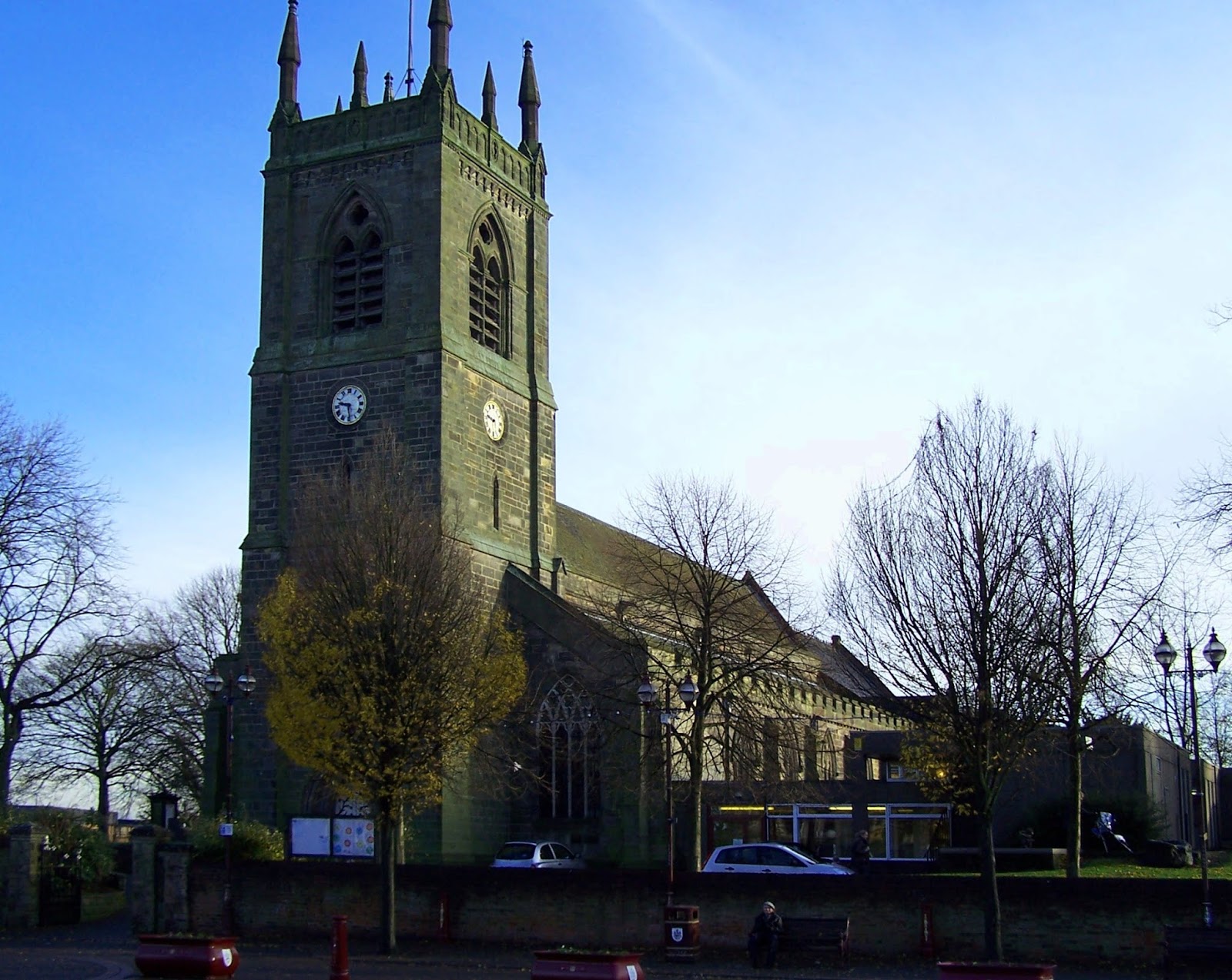
St. Mary's, Ilkeston, where Anne Wagg was buried in 1663
(Image: Russ Hamer, via Wikimedia Commons)


Read more about Anne Wagg and other women accused of witchcraft in Accused: British Witches Throughout History available from Amazon and Pen and Sword Books

A-Z of the Accused: Elizabeth Kennet


Name: Elizabeth Kennit/Kennet, alias Smith

Location: Stepney,  Middlesex

Date: 1659

Accusations: Elizabeth was accused of bewitching Sarah Rose on 1st April 1659. Sarah was “wasted,  consumed,  pained and lamed”, and was still in the same lamentable condition in June of that year when Elizabeth was before the courts. Interestingly,  it appears that the widowed Elizabeth married Lawrence Kennet less than a month after the death of his first wife,  Rhoda, which might have contributed towards the accusations against her. 

Outcome: Luckily for Elizabeth,  perhaps largely due to the wane in witchcraft prosecutions, on 29 June 1659 she was found not guilty of the charges against her and presumably set free.  A woman by that name was buried in Stepney 24th October,  1683.

Wednesday, 8 May 2019

A-Z of the Accused: Rebecca Jones

Name: Rebecca Jones

Location: St.  Osyth, Essex

Date: 1645

Accusations: In the midst of the fresh surge of witchcraft accusations during the Civil War period,  Rebecca was accused of causing the deaths of Thomas Bumpstead and his wife Katherine through witchcraft.  After her apprehension she confessed that nearly a quarter of a century beforehand,  she had been in service to a man named John Bishop. A “handsome young man” knocked at the door, and,  after asking how she was,  he took a pin from her own sleeve pricked her left wrist twice.  After this startling behaviour,  the visitor wiped off the resultant drop of blood with his fingertip,  before leaving.  In hindsight,  Rebecca believed this man to have been the Devil. 

Three months later,  a man with “great eyes” and dressed in a ragged suit gave her “three things like moles,  having four feet apiece,  but without tails,  and of a black colour.” The man told her to nurse the creatures,  saying that in return they would give her vengeance against her enemies, and that if she murdered a few,  he would grant her forgiveness.

After naming her new familiars Susan,  Annie, and Margaret,  Rebecca sent an imp to kill Thomas Bumpstead as payback for beating her son for eating honey from the Bumpstead house. She also confessed to sending another to kill his wife.  The third imp was sent to  torment Mistress Darcy’s child, but not with the intent of killing it.

Outcome: Rebecca was found guilty of causing the death of Thomas Bumpstead and sentenced to death. 

Wednesday, 8 August 2018

The Witches of Warboys and the Death of Lady Cromwell

The case of the Warboys Witches is perhaps one of England's most well known witch-trial cases. The details are related at length in the extensive albeit descriptively-titled 1593 pamphlet:

The most strange and admirable discovery of the three Witches of Warboys, arraigned, convicted and executed at the last Assizes at Huntingdon, for the bewitching of the five daughters of Robert Throckmorton Esquire and divers other persons, with sundry Devilish and grievous torments: And also for the bewitching to death of the Lady Cromwell, the like hath not been heard of in this age.


According to the account, when one of the daughters of Robert Throckmorton fell ill with strange fits, the family did not at first suspect witchcraft to be behind her illness. As his other daughters also started to share their sister's strange symptoms however, suspicion slowly but surely grew, and the finger was pointed at local woman Alice Samuel, fuelled by the girls themselves naming her as their tormentor, along with, eventually, her husband John and daughter Agnes.  


The Manor House at Warboys 
(With kind permission of Philip Almond)

It was mid-March 1590 when Lady Susan Cromwell nee Weeks, entered the story. Second wife to Sir Henry Cromwell, (who was not only an influential man in the area but also happened to be the landlord of the Samuel family) Lady Cromwell and her daughter-in-law visited the beleaguered Throckmorton household to offer their sympathies for the suffering of the children.

According to the pamphlet, Lady Cromwell:


'...had not long stayed in the house but the children which were there fell into their fits. And were so grievously tormented for the time that it pitied the good lady's hear to see them, insomuch that she could not abstain from tears.'


It was not long before she sent for Alice Samuel; being unable to refuse a summons from the wife of the family landlord, Alice had no choice but to attend, whatever her misgivings might have been. Much to her horror, upon Alice's arrival the condition of the ill children worsened, something that did not bode well for the Samuel family for:

'Then the Lady Cromwell took Mother Samuel aside, and charted her deeply with this work, using also some hard speeches to her.'


Being thus accused of causing the suffering of the children, Alice was understandably upset, denying the accusation and retorting that the Throckmorton's accused her unjustly. It wasn't Master and Mistress Throckmorton who accused her, Lady Cromwell reminded Alice firmly, but the girls themselves who pointed the finger, the spirit that spoke through the girls when they were in their fits vowing that Alice was to blame for their pitiful condition.  

Joan Throckmorton, hearing Alice's denial, insisted that Alice was indeed responsible despite her protestations to the contrary, and that there was a spirit with her who was saying as much at that precise moment. The girl professed extreme surprise to learn that no one else present could hear the 'spirit' speak, as she herself could hear it loud and clear. Throughout this, Alice Samuel continued to insist that she had nothing to do with the strange illness that had invaded the household, but Lady Cromwell, unconvinced, wished to question her further in the presence of a visiting divine, Master Doctor Hall.
Oliver Cromwell, Step-Grandson to Lady Susan 
(Wellcome Library, London)

Alice made excuse after excuse however, and it was clear that she intended to leave for her home without satisfying Lady Cromwell in her questions. Thus frustrated, Lady Cromwell pulled off the kerchief Alice wore over her head and cut off a lock of her hair. Not only that, but she took the old woman's hair lace and gave both to the mother of the children with the instruction to put both in the fire to burn them in order to break Alice's power over the girls. At this unexpected and unwarranted violation, Alice Samuel lost whatever composure she had remaining, uttering the fateful and – some later vowed, fatal – words:

'Madam, why do you use me thus? I never did you any harm as yet.'

What happened next goes unrecorded, but Lady Cromwell left the Throckmorton household that night to return home. She did not sleep well at all, and was 'very strangely tormented' by dreams of Alice Samuel. Her agitated state woke her daughter-in-law who was sleeping with her, and she woke Lady Cromwell in turn, at which the older woman described how a cat, sent to her by Alice Samuel had tormented her in her sleep, threatening to pick the skin and flesh from her arms and body.


Lady Cromwell was so disturbed by the dream that she did not sleep again that night our of sheer terror. Not only that, we are told that 'not long after' she fell ill with a strange sickness. It might have been brushed off as coincidence, but the fits suffered by the lady were said to be similar in nature to those experienced by the Throckmorton girls. The only difference was that she was perfectly aware of the fact the whole time, unlike the girls who were periodically unaware of others in the room with them. Throughout, Lady Cromwell never forgot the words uttered to her by Alice Samuel, that she had not caused her any harm – as yet. Lady Cromwell passed away on 11th July, 1592, a year and a quarter after her ill-fated visit to Warboys.  

It was downhill for the Samuel family from then on. In preparation, Agnes Samuel and Joan Throckmorton were lodged together in the Crown Inn in Huntingdon. Upwards of 500 people were estimated to have visited the pair, attempting and failing to bring Joan out of her fits. On the day of the assizes themselves in April 1593, John Samuel was finally compelled to utter words he had previously refused, admitting that he was a witch and had been party to the death of the Lady Cromwell and commanding Joan Throckmorton to come out of her fit. He was right to have been apprehensive about repeating the words, as the girl appeared as if cured the moment he uttered them. Alice Samuel had also been made to repeat the same words before this point and the same cure was witnessed.  

That evening the judge himself along with several gentlemen and fellow justices attended the pair and it was proved beyond doubt that the only thing that ended Joan's fits was a charge recited by Agnes. 

'As I am a witch and a worse witch than my mother, and did consent to the death of the Lady Cromwell, so I charge the Devil to let Mistress Joan Throckmorton come out of her fit at this present.'

Tragically for Agnes, the girl recovered in full view of those in attendance.  

The following day three indictments were made against the Samuels: the first and most damning was that they were to blame for the death of Lady Cromwell through bewitchment, while the other two dealt with the bewitching of the Throckmorton girls and others in the Throckmorton household. All three were criminal offences under the 1563 Witchcraft Act, but bewitching to death carried with it the death penalty, a crime of which, after the matter was debated for five hours, the Samuel family were found guilty.  

On the day of their execution, Alice Samuel was asked as she stood on the ladder in her final moments to confess again to the murder of Lady Cromwell through witchcraft. She was guilty, she told the assembled crowd, and, when asked why she had borne the lady so much animosity Alice admitted it was because Lady Cromwell had cut some of her hair and burned it along with her hair lace, and that her actions had been carried out in the spirit of revenge. She also implicated her husband in the murder, although right to the end she refused to involve her daughter, trying to protect Agnes to the end. (John Samuel himself never admitted to anything aside from the charge he was forced to recite and neither did Agnes, both going to the noose maintaining their innocence.)


Lady Cromwell's widower, Sir Henry Cromwell, received the goods belonging to the Samuel family, as his right as their landlord. There cannot have been much due to their status, but there was enough money at least to commission an annual sermon to be preached at Huntingdon against the detestable sin of witchcraft. This was carried out until 1812; by that point however the focus had shifted to become instead an indictment and warning against the believing in, rather than the carrying out, of witchcraft.  


Thou Shalt Not Suffer A Witch To Live: A Tour of England's Witchcraft Legislation

From the middle of the 16th century, to be found guilty of witchcraft was officially a felony in England. Accordingly, if you were unlucky enough to be found guilty of carrying out a range of related practices, you could expect to find yourself facing punishment, from a relatively lenient stint in the pillory to facing the gallows.

What could lead to conviction? And what punishment could you expect at any given point throughout the two centuries that followed? Here is a handy run-down of witchcraft legislation in England.  


1542 Witchcraft Act: An Act against Conjurations, Witchcrafts, Sorcery, and Enchantments.

This short-lived piece of legislation appeared on the statute books in the closing years of the reign of Henry VIII, stipulating that to be found guilty of killing someone by witchcraft was punishable by death. The guilty party would also forfeit their lands and goods, and the option of benefit of clergy (the sparing of life if the condemned could read a passage from the bible) and sanctuary were also revoked.

Death was likewise the punishment for the crimes of causing wasting or illness by witchcraft (or even the intent to do so), wasting or destroying another's goods (and again the mere intent to do so was considered as bad as actually carrying out the act itself) attempting to locate treasure, money or stolen goods, and also inciting someone to love another against their will through magical means.

Image magic, i.e. creating an image of a person and causing harm to them through the pricking or otherwise tormenting of the image, was also included in the list of actions leglislated against in the act. 

The digging up of wayside crosses to find treasure that was suspected to be buried underneath was clearly a problem in Tudor England, and accusations and arrests for this offence were still taking place well into the first quarter of the 17th century

Interestingly, the actions mentioned in the Act were those more often associated with men than women, with the exception of love magic, suggesting that the stereotypical woman witch was not the true target of this piece of legislation. 

The act was repealed by Henry's son, Edward VI upon his accession to the throne in 1547.

:

The remains of Woodhey Cross, Cheshire
(Image by Espresso Addict)


1563 Witchcraft Act: An Act against Conjurations, Enchantments and Witchcrafts

Witchcraft didn't return to the English statute books until 1563, during the reign of Elizabeth I, and this Act marked the first concerted move against witchcraft and related actions. 

Causing death by witchcraft was still punishable by death and the removal of benefit of clergy and sanctuary still applied. (Where loss of goods and lands were concerned however, dower portions and inheritance were  now exempt from the general rule.) 

A sliding scale of offences came into force with this act, as the wasting of another or causing lameness or likewise destruction of goods was punishable on a first offence not by death, but by imprisonment for twelve months. The guilty party would also have to suffer a stint in the pillory four times during that year, along with publically confessing to their crime, but it was still, arguably, better than the previous blanket alternative. (Given the state of the prisons and the frequency of outbreaks of illness however, many unfortunately did not survive their incarceration.)

 A second offence was treated less leniently however, and to be found guilty a second time for the offence of causing wasting or destruction of person or goods resulted in death. A second offence of intending to cause wasting and lameness or destroying goods was punished by imprisonment for life, as was attempted treasure hunting and provoking others to unlawful love.  

Victims of this Act include:
Agnes Waterhouse, the first to be executed for witchcraft in England, executed 1566
Alice, Agnes and John Samuel, The Warboys Witches, executed 1593 


(Image: Wellcome Collection)

1604 Witchcraft Act: An Act against Conjuration, Witchcraft and dealing with evil and wicked spirits.

This Act was one of the earliest pieces of legislation to be passed in the reign of James I – hardly surprising from a monarch with such a personal interest in witches. (James published his anti-witchcraft Daemonologie in 1597, and he was believed to hold a personal vendetta against witches due to his belief that the Berwick Witches had tried to kill him and his Queen.)

As with previous legislation, death was the punishment for bewitching someone to death. Causing illness or destroying goods was again punishable by death for a first offence rather than the two-tiered approach of the 1563 Act. For intending to cause illness or harm to goods, treasure hunting or love magic, a first offence brought imprisonment for a year and four stints in the pillory (for 6 hours at a time) and a repeat offence of any of these acts however brought the death sentence.

A noteworthy departure made the calling up of or communicating with spirits or familiars punishable by death for the first time, rather than just causing death by such means. An additional crime listed in this Act was the exhumation of corpses for use in witchcraft.  

Victims of this Act include:
Anne Whittle and Elizabeth, Alizon and James Device, among the infamous Pendle Witches - executed 1612
Mary Lakeland, one of England's very few verifiable witch burnings, executed 1645


1736 Witchcraft Act:

Under this act in the reign of George II witchcraft ceased to be a felony; instead the belief in witchcraft became the crime and those who accused others of being a witch could and did find themselves – often bewildered to be doing so – before the courts at the instigation of those they had accused.  

Despite the passing of the Act, belief in witchcraft and related superstitions was slow to decline, and particularly in areas such as Devon and Dorset, suspected witches continued to be attacked and accused outside of the court room well into the 19th century and beyond.

The Act itself was used well into the 20th century, most famously in the case of the prosecution and imprisonment of spiritualist medium Helen Duncan in 1944. The Act was not repealed until 1951, when it was replaced by The Fraudulent Mediums Act.  

People convicted under this Act include:
Helen Duncan, the last person to be imprisoned under the Act, imprisoned January 1944
Jane Rebecca Yorke, for pretending in the existence of spirits of the dead, (last person convicted under the Act) bound over and fined £5, July 1944

Helen Duncan displaying the 'ectoplasm' for which she was 
so famously known.
(Image: Wikimedia Commons)